
Dr AS Mehrotra
About Me
Dr AS Mehrotra
DO
Ophthalmologist
10 Years Experience
Biography
My Clinic
OPD Hours
| Monday | Morning | 10:00 AM | - | 02:00 PM |
| Evening | 06:00 PM | - | 09:00 PM | |
| Tuesday | Morning | 10:00 AM | - | 02:00 PM |
| Evening | 06:00 PM | - | 09:00 PM | |
| Wednesday | Morning | 10:00 AM | - | 02:00 PM |
| Evening | 06:00 PM | - | 09:00 PM | |
| Thursday | Morning | 10:00 AM | - | 02:00 PM |
| Evening | 06:00 PM | - | 09:00 PM | |
| Friday | Morning | 10:00 AM | - | 02:00 PM |
| Evening | 06:00 PM | - | 09:00 PM | |
| Saturday | Morning | 10:00 AM | - | 02:00 PM |
| Evening | 06:00 PM | - | 09:00 PM | |
| Sunday | Morning | 10:00 AM | - | 02:00 PM |
| Evening | 06:00 PM | - | 09:00 PM |
Treatments
Specialised care and treatments offered
COMPREHENSIVE PEDIATRIC EYE EXAMINATION
Pediatric eye exams assess visual development in children which is crucial as many problems are easier to treat if found early. Detecting refractive errors or amblyopia can improve lifelong visual outcomes significantly.
- Common issues screened: Squint (strabismus), lazy eye (amblyopia), refractive errors like nearsightedness or farsightedness .
- Examination components: Visual acuity measurement adapted by age, refraction tests, ocular alignment assessment .
- Interventions: Glasses prescription , patching therapy , or referral for surgery if necessary based on diagnosis.
- Importance of regular checks: Early screening supports normal visual development reducing risk of permanent impairment.
Pediatric ophthalmic evaluation offers a foundation for healthy eyesight through childhood ensuring any abnormalities are addressed promptly during critical growth stages.
DRY EYE SYNDROME MANAGEMENT
A condition marked by insufficient tear production or poor tear quality leads to dry eye syndrome causing discomfort and potential corneal damage without treatment. Proper diagnosis guides therapy choices effectively reducing symptoms.
- Symptoms & Causes : Burning sensation , redness , foreign body feeling ; often associated with aging , environmental factors , or autoimmune diseases .
- Diagnostic Techniques : Tear break-up time test , Schirmer’s test , ocular surface staining help quantify dryness severity .
- Treatment Approaches : Use of artificial tears , anti-inflammatory medications , punctal plugs insertion depending on underlying cause .
- Patient Advice : Lifestyle modifications including humidified environments , avoiding irritants support symptom relief .
Continuous monitoring coupled with personalized treatment plans ensures optimal control over dry eye symptoms enhancing comfort and protecting ocular surface health.
CATARACT EVALUATION AND SURGERY PREPARATION
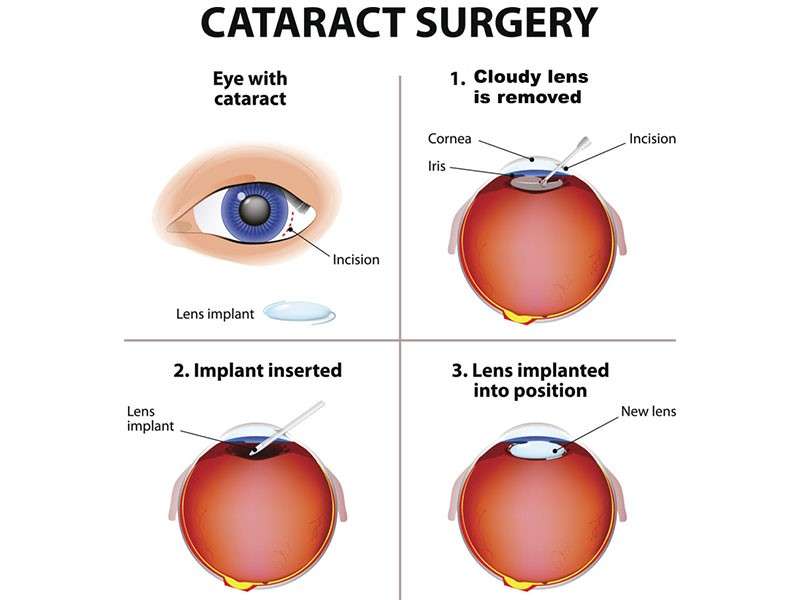
Cataracts cause clouding of the lens inside the eye leading to diminished vision. Thorough evaluation determines the right timing for surgical removal which restores sight effectively when indicated.
- Causative factors & symptoms: Gradual blurry or dim vision, increased glare sensitivity; commonly develops with aging but also from trauma or medication side effects.
- Eyelens assessment methods: Slit-lamp biomicroscopy evaluates cataract density along with visual acuity tests to gauge impact on daily activities.
- Treatment path : Surgery involves replacing the cloudy lens with an artificial intraocular lens when quality-of-life decline warrants intervention.
- Surgical expectations: Typically outpatient procedure with rapid recovery; improved clarity post-operation is usual outcome.
Cataract surgery remains one of the safest ways to significantly enhance vision impaired by lens opacification after appropriate clinical assessment confirms suitability for the procedure.
AGE-RELATED MACULAR DEGENERATION (AMD) MONITORING
The macula is responsible for central vision clarity, which can deteriorate with age due to macular degeneration. Monitoring this condition helps preserve sight quality through early detection of progression.
- Symptoms and causes: Blurred or distorted central vision; associated with aging and genetic factors affecting macular cells.
- Diagnostic methods: Includes Amsler grid testing and retinal imaging techniques such as optical coherence tomography (OCT).
- Treatment strategies: Nutritional supplements may slow progression; advanced cases might require injections or laser therapy.
- Lifestyle advice: Smoking cessation and diet rich in antioxidants can reduce risk or delay worsening symptoms.
Lifelong surveillance for AMD allows for timely lifestyle adjustments and medical treatments aimed at preserving useful vision as much as possible.
GLAUCOMA SCREENING AND MANAGEMENT
Glaucoma is a group of eye conditions that damage the optic nerve, often due to increased intraocular pressure, potentially leading to irreversible blindness. Routine screening plays a vital role in early detection.
- Symptoms and causes: Often silent initially, with progressive peripheral vision loss; elevated eye pressure is a key risk factor.
- Diagnosis: Includes tonometry to measure eye pressure, optic nerve assessment, and visual field testing.
- Treatment options: Eye drops to lower pressure, laser therapy, or surgery may be recommended depending on disease severity.
- Prevention and monitoring: Regular check-ups help track pressure changes and optic nerve health over time.
A proactive approach through frequent glaucoma screenings helps maintain visual function by enabling timely treatment interventions before significant nerve damage occurs.
DIABETIC RETINOPATHY SCREENING
Diabetic retinopathy is a complication of diabetes that affects the eyes and can lead to vision loss if untreated. Early detection through regular screening is essential for preventing severe damage.
- Symptoms and causes: Often asymptomatic in early stages; caused by damage to blood vessels in the retina due to high blood sugar levels.
- Diagnosis: Dilated eye examination with fundus photography or fluorescein angiography helps identify retinal changes.
- Treatment options: Maintaining blood sugar control, laser therapy, intraocular injections, or vitrectomy depending on severity.
- Management: Regular comprehensive eye exams are critical for monitoring progression and timely intervention.
- What to expect: Early intervention can prevent vision loss; treatment success depends on disease stage at diagnosis.
Keeping your diabetes well-managed and attending scheduled eye screenings dramatically reduces the risk of severe complications from diabetic retinopathy.