
Dr Neela Patwardhan
About Me
Dr Neela Patwardhan
Ophthalmologist
Biography
My Clinic
OPD Hours
| Tuesday | Morning | 10:00 AM | - | 02:00 PM |
| Evening | 06:00 PM | - | 09:00 PM | |
| Wednesday | Morning | 10:00 AM | - | 02:00 PM |
| Evening | 06:00 PM | - | 09:00 PM | |
| Thursday | Morning | 10:00 AM | - | 02:00 PM |
| Evening | 06:00 PM | - | 09:00 PM | |
| Friday | Morning | 10:00 AM | - | 02:00 PM |
| Evening | 06:00 PM | - | 09:00 PM | |
| Saturday | Morning | 10:00 AM | - | 02:00 PM |
| Evening | 06:00 PM | - | 09:00 PM | |
| Sunday | Morning | 10:00 AM | - | 02:00 PM |
| Evening | 06:00 PM | - | 09:00 PM | |
| Thursday | Morning | 10:00 AM | - | 02:00 PM |
| Evening | 06:00 PM | - | 09:00 PM |
Treatments
Specialised care and treatments offered
DRY EYE SYNDROME
This common condition occurs when your eyes do not produce enough tears or when your tears evaporate too quickly. Dry Eye Syndrome can lead to discomfort and potential damage to the surface of your eyes if left unaddressed.
- Symptoms commonly include dryness, irritation, redness, and sometimes excessive tearing in response to irritation.
- Diagnosis generally involves evaluation techniques such as tear break-up time tests to determine tear quality.
- Management includes artificial tears for lubrication; medications might be prescribed in more severe instances.
- Lifestyle changes like reducing screen time can greatly benefit symptom relief.
Managing dry eyes effectively can significantly enhance daily comfort levels while ensuring overall eye health remains intact.
RETINAL DETACHMENT
A retinal detachment occurs when the retina separates from its underlying layer of support tissue. This serious condition requires prompt attention to prevent permanent vision loss.
- Symptoms may range from sudden flashes of light to a shadow or curtain appearing in peripheral vision.
- An ophthalmologist diagnoses retinal detachment through thorough exams including visual acuity tests and detailed imaging techniques like ultrasound or fundus photography.
- Treatment options depend on severity but may involve laser surgery or pneumatic retinopexy to reattach the retina properly.
- Post-treatment follow-up care is essential for ensuring successful healing .
Timely medical intervention plays a crucial role in maintaining optimal vision after a retinal detachment event.
AGE-RELATED MACULAR DEGENERATION (AMD)
AMD is a progressive retinal disease that primarily affects older adults. It causes deterioration of the central portion of the retina known as the macula, impacting sharp central vision essential for tasks like reading and driving.
- Symptoms include blurred or distorted vision, along with dark areas in your central vision.
- Diagnosis typically requires an eye examination utilizing imaging technologies such as OCT (optical coherence tomography).
- Treatment might consist of dietary adjustments, vitamins specifically formulated for AMD, or anti-VEGF injections for wet AMD forms.
- Patient education on lifestyle changes can also help slow disease progression significantly.
By understanding this condition early on, patients can take proactive steps toward preserving their eyesight as they age.
DIABETIC RETINOPATHY
This condition arises from diabetes-related damage to the blood vessels in the retina. It can develop in anyone who has type 1 or type 2 diabetes and poses risks to sight if left untreated.
- Initial symptoms may include floating spots or blurred vision.
- A dilated eye examination is crucial for diagnosis, allowing for detailed viewing of retinal changes.
- Treatment strategies may involve controlling blood sugar levels, laser therapy, or injections into the eye for more advanced stages of the disease.
- Regular check-ups are vital for early detection and prevention of severe complications such as blindness.
Persistent monitoring can help manage this condition effectively and reduce sight-threatening risks associated with diabetes.
GLAUCOMA
Glaucoma is a group of eye disorders that cause damage to the optic nerve, often associated with increased intraocular pressure. It can lead to irreversible vision loss if not managed properly.
- The primary symptom is often a gradual loss of peripheral vision.
- Diagnosis includes measuring intraocular pressure and conducting visual field tests to assess any damage to the optic nerve.
- Treatment typically comprises medicated eye drops aimed at lowering eye pressure; laser treatment or surgery may be options for severe cases.
- Regular monitoring is essential to adjust treatment plans as necessary and detect any progression early on.
With proper management, individuals with glaucoma can maintain their vision effectively over time.
CATARACTS
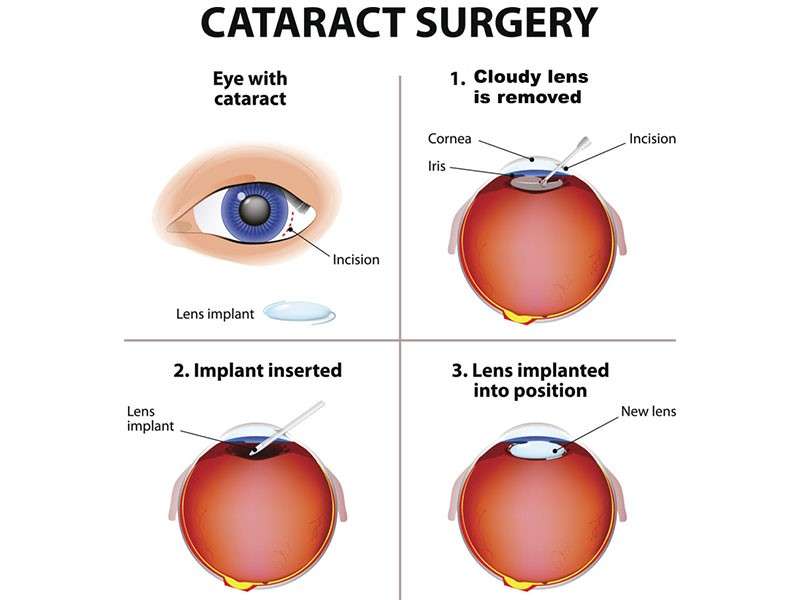
Cataracts are a common eye condition that affects the lens of the eye, leading to cloudy vision. This condition typically develops slowly and can significantly interfere with daily activities.
- Symptoms include blurred vision, difficulty seeing at night, and sensitivity to light.
- Diagnosis usually involves a comprehensive eye exam, assessing visual acuity and examining the lens for cloudiness.
- Treatment options often begin with stronger glasses, but surgery may be necessary when symptoms worsen.
- Surgical procedures typically involve removing the cloudy lens and replacing it with an artificial one, which is highly effective.
- Post-surgery, most patients experience significant improvement in vision and quality of life.
Early detection and intervention can prevent complications and enhance vision recovery.