
Dr Uday Aranke
About Me
Dr Uday Aranke
MBBS
Ophthalmologist
36 Years Experience
Biography
My Clinic
OPD Hours
| Monday | Morning | 09:00 AM | ||
| Evening | 09:00 PM | |||
| Tuesday | Morning | 09:00 AM | ||
| Evening | 09:00 PM | |||
| Wednesday | Morning | 09:00 AM | ||
| Evening | 09:00 PM |
Treatments
Specialised care and treatments offered
DIABETIC RETINOPATHY
This complication affects individuals with diabetes wherein high blood sugar levels harm blood vessels within retina ultimately threatening sight integrity over time. Prompt care delivery remains essential here!
- Symptoms: People might not observe early indicators until substantial damage has occurred including blurry visions through fluctuating states occasionally seen too < / Li! < Li! < Strong! < Symptoms: < / Strong! < People might not observe early indicators until substantial damage has occurred including blurry visions through fluctuating states occasionally seen too …< / Li! < Li! < Strong! < Causes: < / Strong !< Risk factors encompass uncontrolled diabetic states leading directly into vascular changes suffered here along being affected could heighten susceptibility risk enormously…!< / Li! < Li! < Strong !< Diagnosis: < / Strong !< Complete assessments involve repeat dilated fundus examinations paired up right alongside systemic evaluations realizing control measures obtained influencing overall conditions present…!< / Li! < Li !< Strong !< Treatment: < / Strong !< Laser treatments geared towards disrupting harmful growths coupled together potential injections serve fitting mechanisms recommended tailored accordingly upon professional advice given forward provided intervals experienced over phases noted down preferred ways managing continues ongoingly…!< / Li! ! Awareness around maintaining approximate glucose levels via continuous consultation essential keeps complications minimal assisting halt progress deterioration built up damages previously existing alignments remained thus vital during nurturing ocular health matters throughout patient journeys section continuously focused assessed individually longitudinal processes regularly monitored executed appropriately achieving results deserving optimal expectations dissemination detailing accomplishments advancing fostered appropriately witnessed progressed witnessed across pathways laid out encompassing resolutions contemplated solving existing ones ahead elaborated enhanced qualified clearly without compromising patient experiences overall identifying addressing humanity coping evolving present realities communicated forth…/P/>
RETINAL DETACHMENT
A retinal detachment occurs when the retina separates from its underlying supportive tissue. This serious condition can result in permanent vision loss if not treated promptly and appropriately.
- Symptoms : Signs include sudden flashes of light , floaters , shadows in your field of view , or a curtain-like effect obscuring part of your sight .
- Causes : Injury , severe myopia , recent cataract surgery , or inflammatory diseases could trigger retinal detachment .
- Diagnosis : An ophthalmologist conducts thorough exams focusing on visual acuity assessments alongside ultrasound imaging techniques if necessary .
- Treatment : Surgical interventions are typically required such as scleral buckle surgery or vitrectomy based on severity level determined by healthcare provider .
- What to Expect : Recovery varies; post-surgery care will involve medications plus scheduled appointments aimed at ensuring optimal healing occurs successfully within recommended timeframe .
Immediate attention when experiencing related symptoms is pivotal for improving prognosis outcomes overall .
AGE-RELATED MACULAR DEGENERATION (AMD)
Aging can significantly affect eyesight through conditions such as Age-Related Macular Degeneration (AMD), characterized by degradation of the macula leading to central vision loss.
- Symptoms: AMD often manifests as blurred central vision or difficulty recognizing faces while peripheral vision usually remains intact initially.
- Causes: Age is the primary risk factor; additionally smoking and genetics also contribute substantially towards likelihood of developing this condition.
- Diagnosis : Detailed eye examinations including visual acuity tests are instrumental in diagnosing AMD along with retinal imaging for structure evaluation .
- Treatment : While there’s no cure for AMD , management options include vitamin supplementation , anti-VEGF injections , photodynamic therapy , among others depending on individual need .
- What to Expect : Regular follow-ups are essential since progress may vary from one person to another while some patients adapt remarkably well despite challenges posed by this disease .
Timely intervention combined with an active lifestyle promoting eye health plays an essential role combatting progression .
DRY EYE SYNDROME
Dry Eye Syndrome occurs when there’s insufficient tear production or excessive evaporation of tears, leading to discomfort and potential damage to the surface of the eyes.
- Symptoms: Patients may experience dryness, itching, burning sensations, or redness in the eyes. Some might also notice blurred vision that improves with blinking.
- Causes: Causes range from environmental factors like pollution and wind to medical conditions such as autoimmune disorders and side effects from certain medications.
- Diagnosis: An ophthalmologist can diagnose dry eyes through patient history reviews and tests that measure tear production levels using specialized tools.
- Treatment: Management often includes artificial tears for lubrication, lifestyle adjustments like reducing screen time, or prescription medications in more severe cases.
- What to Expect: With proper management strategies in place, most individuals find significant relief from symptoms over time while maintaining ocular comfort during usual activities.
A holistic approach towards treatment can greatly improve quality of life for those suffering from this condition.
GLAUCOMA
Glaucoma refers to a group of eye conditions that damage the optic nerve due to elevated intraocular pressure. This condition can lead to irreversible blindness if not managed effectively.
- Symptoms: Many individuals experience no symptoms until significant vision loss occurs. Early signs may include tunnel vision or blind spots.
- Causes: The exact cause of glaucoma remains unclear; however, factors such as family history, age over 40, and previous eye injuries increase risk.
- Diagnosis: Diagnosis involves comprehensive eye exams including measuring eye pressure and assessing the optic nerve's health using imaging tests.
- Treatment: Treatment may include prescription eye drops to lower pressure, oral medications, or surgical procedures if necessary.
- What to Expect: Regular monitoring and adherence to treatment can stabilize vision. Patients should attend routine check-ups for ongoing assessment of their condition.
Early detection through regular screenings is vital in preventing long-term damage associated with glaucoma.
CATARACTS
Cataracts are a common condition where the lens of the eye becomes cloudy, affecting vision. This gradual clouding can lead to blurred or dimmed eyesight, which may interfere with daily activities.
- Symptoms: Common signs include hazy or blurred vision, increased difficulty with night vision, and seeing halos around lights.
- Causes: Aging is the primary factor for cataract development, but other factors include prolonged UV exposure, diabetes, and certain medications.
- Diagnosis: An eye exam with special instruments is used to check for cataracts. An ophthalmologist assesses vision quality and examines the lens.
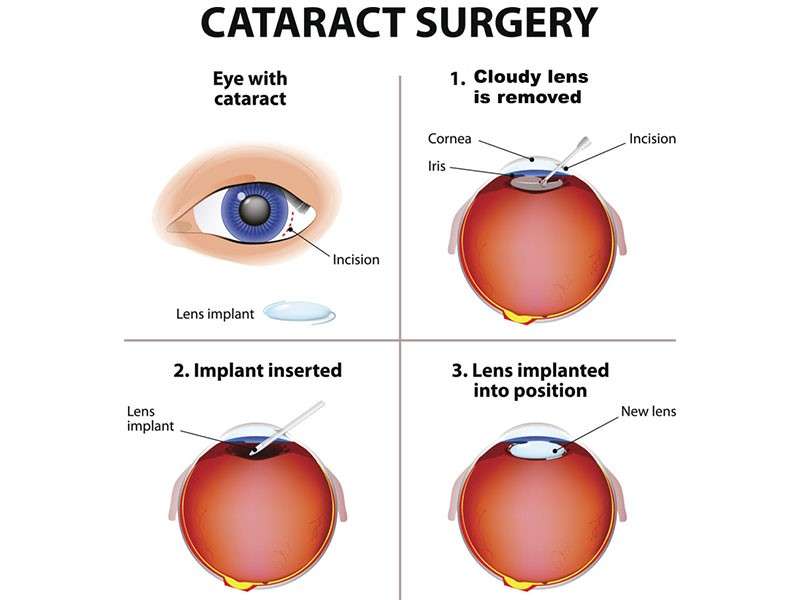
- Treatment: Surgery is often required to remove cataracts. In this procedure, the cloudy lens is replaced with a clear artificial lens.
- What to Expect: Most patients notice improved vision shortly after surgery. Post-operative care includes follow-up visits and possible use of prescribed eye drops.
Cataract surgery is highly successful and safe, allowing many patients to regain clarity in their vision.