
Dr Vikram Bohra B
About Me
Dr Vikram Bohra B
MD
Neurologist
10 Years Experience
Biography
My Clinic
OPD Hours
| Monday | Morning | 10:00 AM | - | 02:00 PM |
| Evening | 06:00 PM | - | 09:00 PM | |
| Tuesday | Morning | 10:00 AM | - | 02:00 PM |
| Evening | 06:00 PM | - | 09:00 PM | |
| Wednesday | Morning | 10:00 AM | - | 02:00 PM |
| Evening | 06:00 PM | - | 09:00 PM | |
| Thursday | Morning | 10:00 AM | - | 02:00 PM |
| Evening | 06:00 PM | - | 09:00 PM | |
| Friday | Morning | 10:00 AM | - | 02:00 PM |
| Evening | 06:00 PM | - | 09:00 PM | |
| Saturday | Morning | 10:00 AM | - | 02:00 PM |
| Evening | 06:00 PM | - | 09:00 PM | |
| Sunday | Morning | 10:00 AM | - | 02:00 PM |
| Evening | 06:00 PM | - | 09:00 PM |
Treatments
Specialised care and treatments offered
CARPAL TUNNEL RELEASE

This outpatient surgical procedure involves relieving pressure on the median nerve within the wrist caused by carpal tunnel syndrome. Symptoms often arise from repetitive hand movements leading to pain or numbness in fingers.
- Common Issues: • Pain & Numbness • Tingling Sensation • Weak Grip Strength • Clumsiness & Coordination Problems Diagnosis & Management:nullifying confusion during diagnostics entails ensuring imaging tests clear direct involvement through rigorous neurological examinations before considering surgical interventions! Achieving Success Through Recovery: While initially temporary relief might ensue following operation due ongoing inflammation related healing process ultimately leads towards sustained improvement towards functionality down road!
LUMBAR DECOMPRESSION SURGERY
Lumbar decompression surgery addresses conditions like lumbar spinal stenosis that cause pressure on spinal nerves leading to pain. By alleviating this pressure, patients often experience significant symptom relief after the procedure.
- Main symptoms include lower back pain radiating down one leg along with weakness or tingling sensations accompanying walking difficulties due to nerve compression severity.
- A comprehensive detection process, involving physical assessments along with imaging techniques like CT or MRI scans helps delineate the cause of symptoms accurately!
- Treatment paths may begin conservatively through physical therapy; however, surgical intervention becomes essential if conservative measures fail over time!
This procedure aims not only at relieving discomfort but also at restoring normal activity levels essential for daily functionality!
CERVICAL FUSION SURGERY
Cervical fusion surgery aims to stabilize the cervical spine by fusing two or more vertebrae together. This procedure is often recommended for conditions such as degenerative disc disease or herniated discs causing nerve compression.
- Painful symptoms may include neck pain radiating into arms or hands along with numbness or weakness due to nerve involvement.
- An accurate diagnosis typically relies on imaging studies such as X-rays or MRIs alongside physical examinations to evaluate spinal alignment and disc integrity.
- Surgical options include anterior cervical discectomy followed by fusion using bone grafts or implants for stability purposes.
- The recovery pathway often involves rehabilitation focusing on neck strengthening and mobility exercises post-surgery.
The primary goal is to alleviate pressure on spinal nerves while restoring function and reducing pain levels effectively over time.
TRANSCRANIAL MAGNETIC STIMULATION (TMS)
TMS is an innovative non-invasive procedure used primarily for treating major depressive disorder when traditional therapies are ineffective. By using magnetic fields, it stimulates nerve cells in the brain.
- This technique targets symptoms such as persistent sadness, fatigue, and lack of interest in daily activities.
- A thorough diagnostic assessment, including mental health evaluations and history taking, precedes TMS application.
- Treatment involves multiple sessions where patients undergo brief pulses directed at specific regions of the brain involved in mood regulation.
- The sessions are generally painless and last about 30-40 minutes per visit over several weeks.
- A positive outcome can lead to symptom relief without the side effects typically associated with antidepressant medications.
TMS represents a promising option for those who have struggled with depression despite conventional treatment approaches.
DEEP BRAIN STIMULATION (DBS)
Deep Brain Stimulation is a surgical treatment for movement disorders such as Parkinson's disease. This innovative procedure involves implanting a device that sends electrical impulses to targeted areas of the brain.
- Common symptoms treated by DBS include tremors, rigidity, and bradykinesia (slowness of movement).
- The diagnosis is based on clinical evaluation and imaging techniques like MRI to map brain structures.
- The management options may start conservatively with medication but evolve towards DBS if medications become insufficient.
- This technique can lead to decreased reliance on medication and reduced side effects associated with long-term drug use.
- A successful surgery often results in significant improvements in motor function and patient independence.
This therapy has transformed the quality of life for many individuals living with chronic movement disorders.
EPILEPSY SURGERY
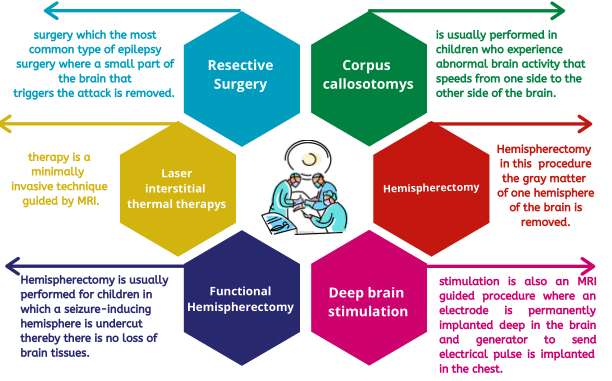
For patients with uncontrollable seizures, epilepsy surgery may offer a solution when medication fails. This procedure aims to remove the area of the brain responsible for seizure activity.
- Symptoms can include recurrent seizures that disrupt daily life and may manifest as unusual sensations, loss of consciousness, or muscle spasms.
- Diagnosis typically includes EEG monitoring, MRI scans, and detailed patient history to identify the seizure focus.
- Treatment options often start with medications, but if they are ineffective, surgical intervention can provide relief.
- The surgery may involve resection of brain tissue or more advanced techniques like laser ablation.
- Post-surgery, patients can expect a reduction in seizure frequency and improved quality of life.
This approach may significantly enhance patient well-being when properly indicated.